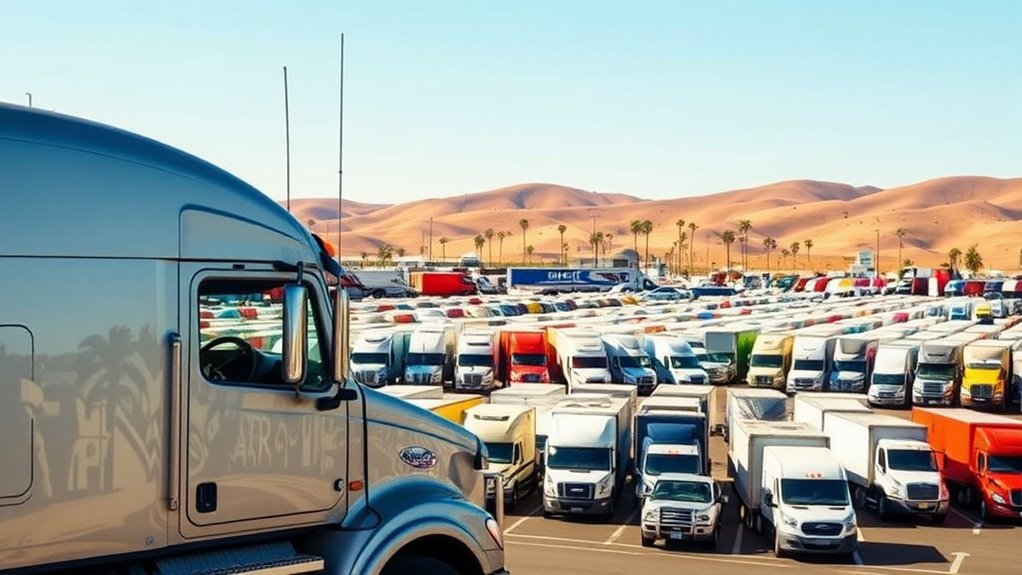
When it comes to commercial vehicle insurance in California, understanding your specific needs is essential for your business's protection. The insurance requirements differ based on vehicle type and weight, impacting your liability coverage considerably. Failing to comply with state and federal regulations can lead to financial risks that jeopardize your operations. What are the exact coverage requirements you need to guarantee compliance and peace of mind while on the road?
When managing a business in California, understanding the nuances of commercial vehicle insurance is fundamental, especially since it's mandatory for all business vehicles licensed in the state. This requirement guarantees that you're protected against potential liabilities while operating your vehicles for business purposes. If you're using vehicles for deliveries or on-location services, having the right insurance coverage isn't just a legal necessity; it's an essential aspect of risk management. California requires SR-22 insurance for certain drivers, which is worth noting in your insurance considerations.
Commercial vehicle insurance differs markedly from personal auto insurance. While personal policies cover your vehicle for general use, commercial insurance specifically addresses incidents that may occur during business activities. For example, if an employee gets into an accident while making a delivery, a personal policy mightn't cover the damages. This distinction is fundamental, as verifying you have adequate coverage can save your business from costly legal issues.
You'll find that California's commercial vehicle insurance requirements vary depending on the types of vehicles you operate. A wide range of vehicles, including cars, cargo vans, trucks, and utility vehicles, fall under this category. If your fleet includes service vehicles for plumbing or electrical work, you must guarantee they're adequately insured as well.
Additionally, if you're transporting people, you'll need to evaluate the seating capacity to determine the minimum coverage required. Compliance with both state and federal regulations is imperative, as failing to adhere to these guidelines can result in severe penalties. In California, commercial truck drivers must have a California intrastate identification number, which is crucial for maintaining compliance with local regulations.
For commercial trucks, the insurance requirements ramp up based on weight and the type of freight being transported. Trucks over 10,000 pounds necessitate specific liability insurance, and if you're hauling hazardous materials, the stakes are even higher. You'll face minimum liability coverage requirements that can reach up to $5 million. For general freight, the minimum is typically around $750,000, but for household goods, this might drop to $300,000. Understanding these limits is fundamental for protecting your business and guaranteeing compliance with California's regulations.
Several factors can influence your commercial auto insurance costs. The make, model, and year of your vehicles play a role, as do the driving experiences of your employees. The location where your vehicles are based also affects premiums, with certain areas presenting higher risk factors.
Furthermore, the specific coverage options you choose, like collision or thorough, can impact your overall costs. It's wise to evaluate your company's needs carefully when selecting an insurance policy.
Ultimately, investing in commercial auto insurance is about risk management and asset protection. This coverage not only safeguards your business assets against financial losses but also prepares you to face potential lawsuits stemming from accidents.
Conclusion
In conclusion, traversing California's commercial vehicle insurance landscape is paramount for your business's protection and longevity. With the stakes as high as a skyscraper, ensuring compliance with state and federal regulations becomes non-negotiable. Adequate coverage not only shields you from financial pitfalls but also enhances your operational confidence. By prioritizing the right insurance policies, you're not just meeting legal obligations; you're fortifying your business against potential risks that could derail your success.